

Beyond Numbers: How Sudoku Develops Pattern Recognition in Young Minds
Share:
Beyond Numbers: How Sudoku Develops Pattern Recognition in Young Minds
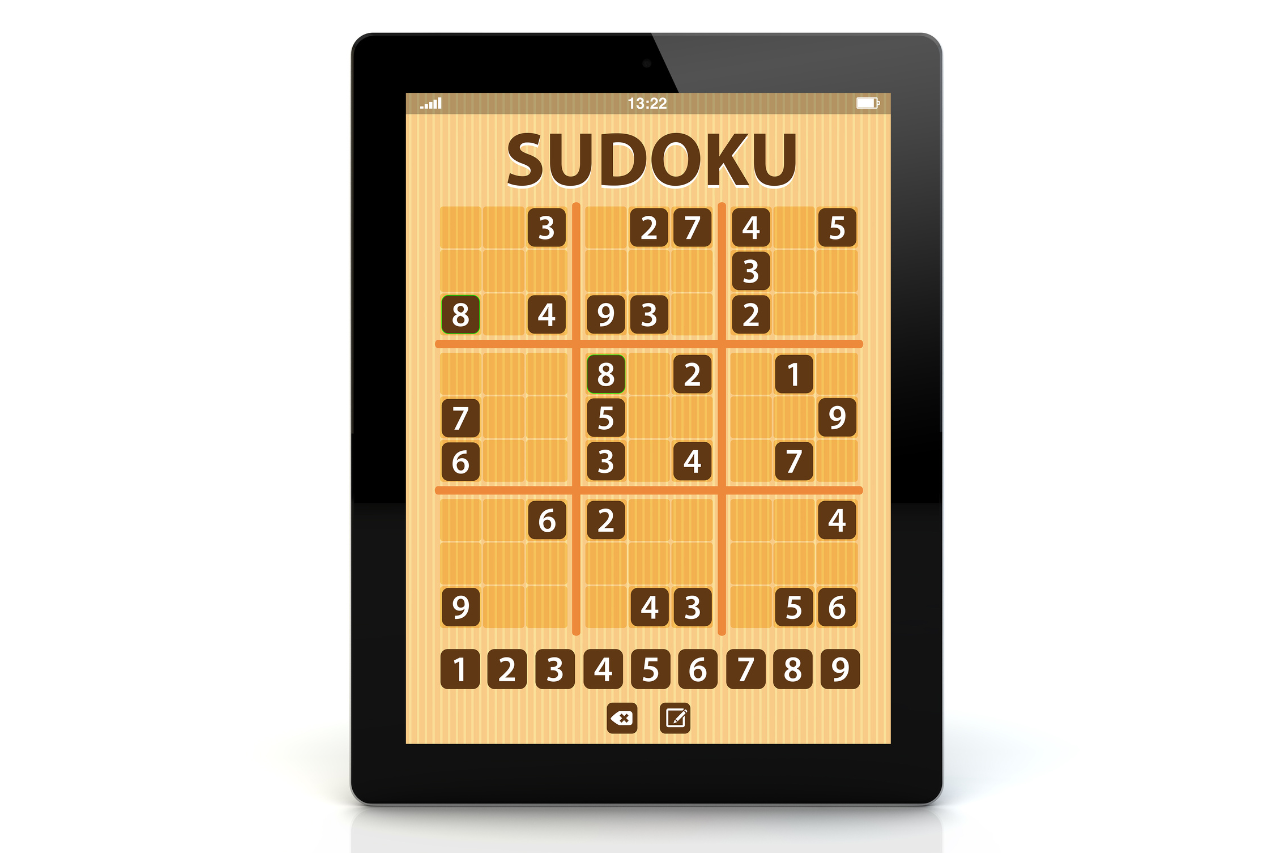
When most parents think about educational activities for their children, Sudoku might not be the first thing that comes to mind. After all, isn’t it just a number puzzle for adults? The reality is far more interesting: Sudoku is an exceptional tool for developing pattern recognition skills in young minds, a fundamental cognitive ability that impacts learning across virtually every subject.
Pattern recognition is one of the most important skills children can develop. It’s the foundation for mathematics, reading, science, music, and even social interactions. And Sudoku, despite its simple appearance, is a powerhouse for building these essential neural pathways.
What Is Pattern Recognition and Why Does It Matter?
Pattern recognition is the brain’s ability to identify regularities, relationships, and recurring structures in information. It’s how children learn that letters form words, numbers follow sequences, and actions have predictable consequences.
When young minds develop strong pattern recognition skills, they become better at:
- Learning to read: Recognizing letter patterns and phonetic structures
- Mathematical thinking: Understanding number relationships and sequences
- Problem-solving: Identifying similarities between current challenges and past experiences
- Scientific reasoning: Observing patterns in nature and experiments
- Critical thinking: Making connections between different pieces of information
Sudoku provides a structured, engaging way to practice pattern recognition repeatedly, turning it from a conscious effort into an intuitive skill.
How Sudoku Uniquely Develops Pattern Recognition
Unlike many children’s games that focus on memorization or simple matching, Sudoku requires multilayered pattern recognition. Young players must simultaneously track patterns across rows, columns, and boxes while understanding how these patterns interact.
Visual Pattern Recognition
When children solve Sudoku puzzles, they learn to scan the grid systematically. They recognize which numbers are missing from specific regions and identify visual patterns in number placement. This trains the brain to process complex visual information efficiently, a skill that translates directly to reading comprehension and spatial reasoning.
Kids begin to notice patterns like “this row already has a 5, so I can’t put another one here” or “these three cells can only contain these three numbers.” These observations require the brain to process visual information, compare it against rules, and identify meaningful patterns.
Logical Sequence Patterns
Sudoku teaches children that actions have logical consequences. If you place a number in one cell, it affects the possibilities in related cells. Young minds learn to trace these chains of logical connections, developing an understanding of cause-and-effect patterns that’s fundamental to all learning.
This sequential pattern recognition helps children understand that problem-solving often requires multiple steps in a specific order—a crucial skill for mathematics, science experiments, and even following complex instructions.
Structural Pattern Recognition
Each Sudoku puzzle has an underlying structure: nine rows, nine columns, and nine 3×3 boxes. Children learn to recognize how these structures relate to each other and constrain possibilities. This understanding of hierarchical structures and overlapping systems prepares young minds for complex thinking in subjects like grammar, computer programming, and organizational skills.
Age-Appropriate Sudoku for Pattern Recognition Development
The beauty of Sudoku is its adaptability to different developmental stages:
Ages 4-6: Introduction with 4×4 Grids
Young children can start with simplified 4×4 Sudoku puzzles using numbers 1-4 or even pictures and shapes. At this age, Sudoku introduces basic pattern concepts:
- Visual discrimination: Recognizing different numbers or symbols
- Simple counting: Understanding that each number appears once in each section
- Early logic: Learning that some placements are possible while others aren’t
Even at this simplified level, children build the neural foundations for more complex pattern recognition later.
Ages 7-9: Transitioning to 6×6 Grids
As children develop, 6×6 Sudoku puzzles provide the perfect stepping stone. These puzzles require more sophisticated pattern recognition:
- Multi-step thinking: Understanding that solving one cell affects others
- Pattern scanning: Looking across multiple rows and columns simultaneously
- Elimination strategies: Recognizing what numbers can’t go in certain positions
Children at this stage begin developing the focused attention and systematic thinking that characterizes strong pattern recognition skills.
Ages 10+: Standard 9×9 Sudoku
Pre-teens and teenagers can tackle full-sized Sudoku puzzles, which offer the complete pattern recognition workout:
- Complex pattern identification: Recognizing advanced techniques like naked pairs, hidden singles, and box-line reduction
- Strategic planning: Thinking several moves ahead
- Abstract pattern thinking: Understanding patterns as concepts rather than just visual arrangements
The Cognitive Science Behind Sudoku and Pattern Recognition
When children solve Sudoku puzzles, specific brain regions activate and strengthen:
The Visual Cortex: Processes the grid layout and number positions, training the brain to efficiently handle visual patterns.
The Prefrontal Cortex: Manages working memory and logical reasoning, helping children hold multiple patterns in mind simultaneously.
The Parietal Lobe: Handles spatial relationships and numerical processing, essential for understanding how patterns interact across the grid.
Neuroscience research shows that repeated activation of these neural networks through activities like Sudoku actually strengthens the connections between brain regions. This is neuroplasticity in action—the brain literally rewires itself to become better at pattern recognition through practice.
Real-World Benefits of Pattern Recognition Through Sudoku
The pattern recognition skills children develop through Sudoku extend far beyond puzzle-solving:
Enhanced Reading Skills
Reading requires recognizing patterns in letters, words, and sentence structures. Children who develop strong visual pattern recognition through Sudoku often show improved reading fluency. They become better at recognizing word patterns, understanding text structure, and making predictions about content.
Improved Mathematical Ability
Despite using numbers, Sudoku isn’t about arithmetic, but it dramatically improves mathematical thinking. Children learn to recognize numerical patterns, understand relationships between numbers, and apply logical rules systematically. These skills directly translate to algebra, geometry, and problem-solving in math class.
Better Scientific Thinking
Science is fundamentally about recognizing patterns in nature and experimental data. Young Sudoku players develop the habit of careful observation, systematic testing of hypotheses, and logical deduction, all essential scientific skills.
Stronger Memory and Attention
Pattern recognition and working memory are intimately connected. As children practice holding and manipulating patterns in their minds during Sudoku, their overall memory capacity and attention span improve.
How Sudoku Differs from Other Pattern Recognition Activities
Many activities claim to develop pattern recognition, so what makes Sudoku special?
Compared to Matching Games: Simple matching games develop basic visual recognition, but Sudoku requires understanding relationships between patterns rather than just identifying identical items.
Compared to Digital Games: While many apps offer pattern recognition exercises, Sudoku provides sustained, focused attention on a single complex problem rather than rapid-fire simple challenges. This deep engagement creates stronger neural pathways.
Compared to Traditional Worksheets: Unlike repetitive worksheets, Sudoku is inherently engaging. Children willingly practice pattern recognition because solving the puzzle is intrinsically rewarding, not because they’re required to complete assignments.
Teaching Pattern Recognition Through Sudoku: A Parent’s Guide
Parents can maximize the pattern recognition benefits of Sudoku with these strategies:
Start with Observable Patterns
When introducing Sudoku to children, explicitly point out patterns: “Look, this row already has 1, 2, and 3. What pattern do you notice?” Help them verbalize the patterns they’re seeing, which strengthens understanding.
Encourage Systematic Scanning
Teach children to scan rows, columns, and boxes methodically rather than randomly looking around the grid. This systematic approach trains the brain to process patterns efficiently and completely.
Ask Pattern-Based Questions
Instead of telling children what number goes where, ask questions that highlight patterns: “What numbers are missing from this box?” or “What number can’t go in this row because of the pattern you see?”
Celebrate Pattern Discoveries
When children independently recognize a new pattern or solving technique, celebrate it enthusiastically. This positive reinforcement encourages continued pattern-seeking behavior.
Connect Patterns to Other Learning
Help children see how Sudoku patterns relate to other subjects. “Remember how you found that pattern in Sudoku? That’s just like finding patterns in this word family in reading!”
Common Mistakes to Avoid
While Sudoku is excellent for developing pattern recognition, some approaches can limit its effectiveness:
Doing Too Much Too Soon: Jumping to full-sized 9×9 puzzles before a child is ready can be frustrating and discourage pattern recognition development. Start small and progress gradually.
Focusing Only on Completion: If the goal becomes just finishing the puzzle rather than understanding the patterns, learning opportunities are lost. Emphasize the “why” behind each move, not just getting to the end.
Allowing Guessing: When children guess rather than using logic, they’re not developing pattern recognition skills. Encourage logical deduction, even if it means taking longer to solve the puzzle.
Creating Negative Associations: If Sudoku becomes a chore or punishment, children won’t engage deeply enough to develop pattern recognition skills. Keep it fun and voluntary.
Sudoku Variations for Enhanced Pattern Recognition
Different Sudoku variations develop different aspects of pattern recognition:
Picture Sudoku: Uses images instead of numbers, excellent for young children developing visual discrimination skills.
Color Sudoku: Requires recognizing color patterns rather than numerical patterns, engaging different neural pathways.
Irregular Sudoku (Jigsaw Sudoku): Features non-square regions, forcing children to recognize patterns in unusual shapes and building cognitive flexibility.
Greater Than/Less Than Sudoku: Adds inequality symbols between cells, developing comparative pattern recognition alongside standard Sudoku logic.
Each variation provides a fresh challenge that prevents pattern recognition from becoming rote and mechanical.
The Long-Term Impact on Cognitive Development
The pattern recognition skills children develop through Sudoku create lasting cognitive advantages:
Academic Performance: Students with strong pattern recognition consistently perform better across subjects, particularly in STEM fields.
Problem-Solving Confidence: Children who regularly identify and work with patterns develop confidence in their ability to tackle unfamiliar challenges.
Cognitive Flexibility: Recognizing that patterns can be identified in multiple ways builds mental flexibility—the ability to approach problems from different angles.
Lifelong Learning Skills: Pattern recognition is fundamental to learning new information efficiently throughout life. Starting this development early creates better learners.
Integrating Sudoku into Educational Settings
Teachers and homeschooling parents can effectively incorporate Sudoku for pattern recognition development:
Morning Warm-Up Activity: Start the day with a quick Sudoku puzzle to activate logical thinking and pattern recognition before academic subjects.
Math Centers: Include Sudoku puzzles at various difficulty levels in math centers, allowing students to self-select appropriate challenges.
Brain Breaks: Use short Sudoku puzzles as constructive brain breaks that maintain cognitive engagement while providing relief from directed instruction.
Cross-Curricular Connections: Explicitly connect Sudoku pattern recognition to patterns in literature, history, science, and art.
Measuring Progress in Pattern Recognition
Parents and educators can track pattern recognition development through Sudoku by observing:
- Speed Improvement: Children naturally solve puzzles faster as pattern recognition becomes more automatic
- Strategy Evolution: Progress from random trial-and-error to systematic, logical approaches
- Difficulty Advancement: Ability to successfully tackle increasingly complex puzzles
- Independent Recognition: Discovering new solving techniques without instruction
- Transfer to Other Activities: Applying pattern recognition skills in non-Sudoku contexts
Conclusion: Sudoku as a Foundation for Learning
Pattern recognition is arguably the most fundamental cognitive skill for learning, and Sudoku provides an engaging, accessible way to develop this ability in young minds. Unlike many educational activities that children tolerate rather than enjoy, Sudoku offers intrinsic motivation, the puzzle itself is the reward.
When children regularly engage with Sudoku puzzles appropriate to their developmental level, they’re not just solving number puzzles—they’re building neural pathways that will support learning across every academic subject and real-world challenge they encounter.
The investment is minimal: just a Sudoku puzzle book and a pencil. The potential returns are enormous: stronger cognitive abilities, better academic performance, and enhanced problem-solving skills that last a lifetime.
If you’re looking for a single activity that develops multiple aspects of pattern recognition while keeping children engaged and challenged, Sudoku is hard to beat. It truly goes beyond numbers, shaping how young minds perceive, analyze, and understand the patterns that structure our world.
Ready to help the young minds in your life develop powerful pattern recognition skills? Start with age-appropriate Sudoku puzzle books and watch as their cognitive abilities flourish, one logical step at a time!
Most Popular
Get The Latest Updates
Subscribe To Our Weekly Newsletter
No spam, notifications only about new products, updates.
Categories
On Key
Related Posts
What is the Hidden Rule in Sudoku?
Share: If you’ve been solving Sudoku puzzles for a while, you’ve probably mastered the basic rules: fill each row, column, and 3×3 box with the

The Science Behind Sudoku: Why This Puzzle Boosts Children’s Brain Power
Share: As a parent or educator, you’re constantly seeking activities that entertain children while developing their cognitive abilities. Sudoku—those number grids you might associate with

How to Solve Crossword Puzzles for Beginners: A Complete Step-by-Step Guide
Share: How to Solve Crossword Puzzles for Beginners: A Complete Step-by-Step Guide Staring at a blank crossword puzzle can feel intimidating. All those empty squares,
Crossword Puzzle Tips and Tricks: Expert Strategies to Solve Faster and Smarter
Share: Crossword Puzzle Tips and Tricks: Expert Strategies to Solve Faster and Smarter You’ve mastered the basics of crossword puzzles, but now you’re ready to